What Is Missed-Call Text-Back, and Is It Enough by Itself?

Missed-call text-back texts callers back in seconds. Here's what it catches, what it misses, and what home service pros need with it.
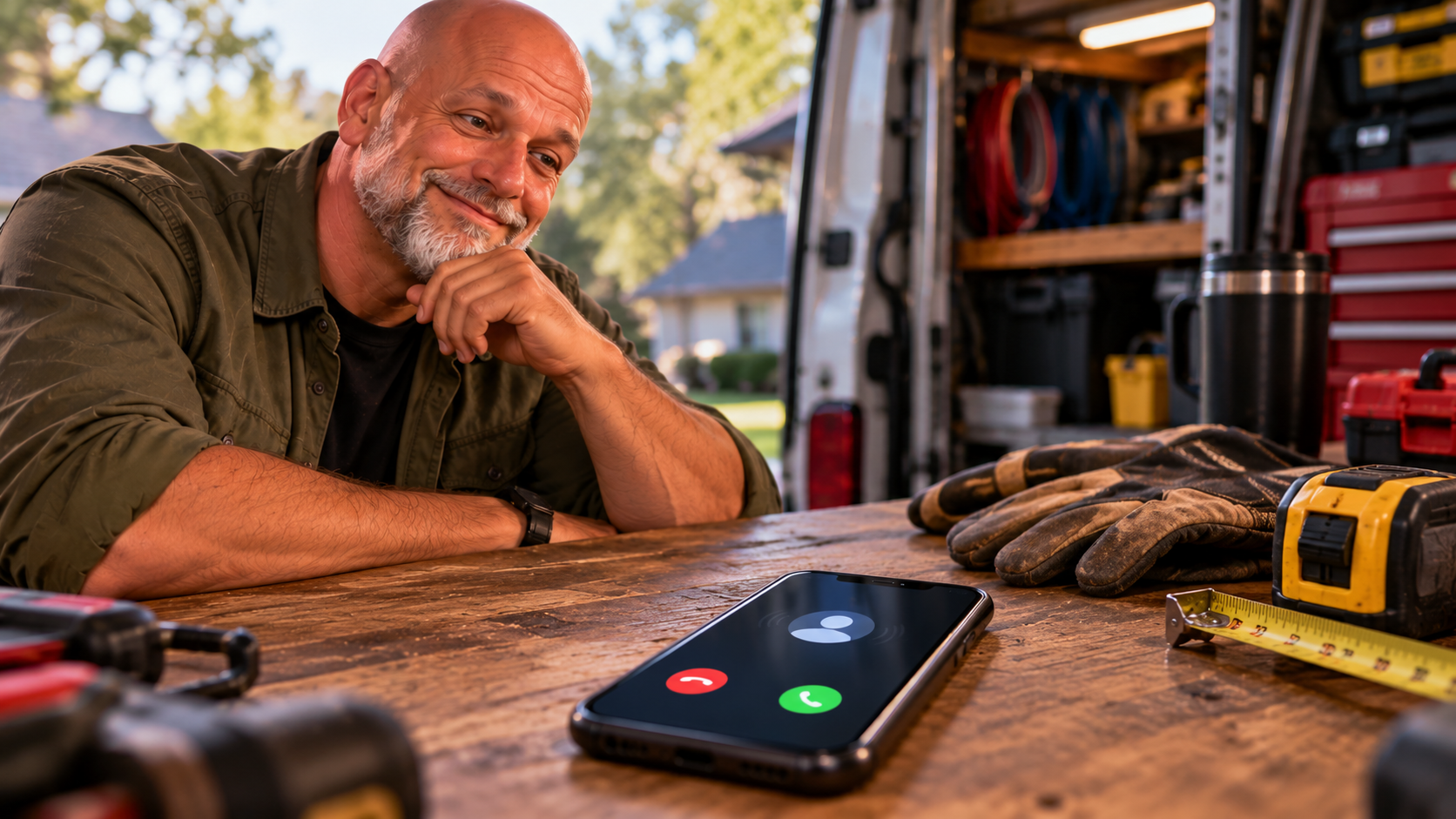
It's 2:40 on a July afternoon in Little Rock. You're on a roof in West Little Rock and it's 98 degrees up there. Your phone buzzes in your pocket and you let it go to voicemail, because you're not answering a call while you're on a pitch. By the time you climb down, that homeowner has already called the next roofer on the list, and that roofer picked up.
What Is Missed-Call Text-Back?
Missed-call text-back is an automation that sends a text to anyone whose call you don't answer, usually within seconds. The text tells the caller you saw the call and asks them to reply, so the conversation keeps going instead of dying in voicemail. It's a safety net for the calls you can't pick up.
How Does Missed-Call Text-Back Work?
Missed-call text-back watches your business line and fires off a text the moment a call goes unanswered. There's nothing for anyone to remember to do. The call rings out, the system notices, and the caller's phone buzzes before they've had time to dial your competitor.
A typical message reads something like:
"Hey, this is [Your Business]. Sorry we missed you, we're out on a job. What can we help you with? Reply here and we'll get you taken care of."
If the caller replies, the thread lands in your inbox with their number, their message, and when they called. A voicemail nobody leaves becomes a written lead you can act on.
Why Do Little Rock Home Service Businesses Miss So Many Calls?
Home service businesses miss calls because the people who'd answer the phone are the same people doing the work. Roofers are on roofs. HVAC techs are in attics in August. Gutter crews are on ladders. Spring hail and summer heat send call volume up at exactly the moment every hand is already busy.
It isn't just a local problem. Invoca's 2026 analysis of more than 70 million calls found that 44% of callers to businesses never reach a person (Invoca, 2026). For the full picture of why this happens, see
Missed Calls Are a Systems Problem, Not a You Problem.
What Happens When a Customer's Call Goes Unanswered?
Most unanswered callers leave, and fewer than half leave a voicemail. A 2025 CallRail survey of 1,000 U.S. consumers found that only 42% leave a voicemail when a business doesn't answer, 21% immediately call another business, and 82% say they'll call a competitor if nobody picks up (CallRail, 2025).
So the old routine of checking voicemail at the end of the day and calling people back misses most of the people who called. They never left a message, and the ones who called someone else are already booked.
What Does Missed-Call Text-Back Actually Catch?
Text-back catches the caller in the few minutes between "they didn't answer" and "I'll try the next guy." A text that shows up within seconds tells them the business is real, it's busy working, and it wants the job. That's often enough to keep them from calling someone else.
It also catches the 58% who would never have left a voicemail. Every missed call gets a written thread with a phone number attached, whether the caller left a message or not. That alone makes it worth having.
Is Missed-Call Text-Back Enough by Itself?
No. Text-back is the floor, not the fix. It sends one message and then waits. If the customer doesn't reply, nothing else happens. If they do reply, they're asking a question that still needs a fast answer. And a text can't quote a gutter job, check your schedule, or book the appointment.
Speed is the whole game. Harvard Business Review's 2011 research found that companies that tried to reach a lead within an hour were nearly seven times more likely to qualify it than those that waited even an hour longer (HBR, 2011). Text-back makes the first move fast. If the second move happens tonight after supper, you've thrown away most of the advantage. More on that in
You're Not Losing to Better Businesses. You're Losing to Faster Ones.
Text-back on its own also leaves three gaps:
No conversation. The caller wanted to talk to someone, and a text isn't a conversation.- No follow-up. If they ignore the first text, nothing chases them.
- No visibility. You can't see how many calls you're missing or which ones turned into jobs.
What Should Missed-Call Text-Back Be Paired With?
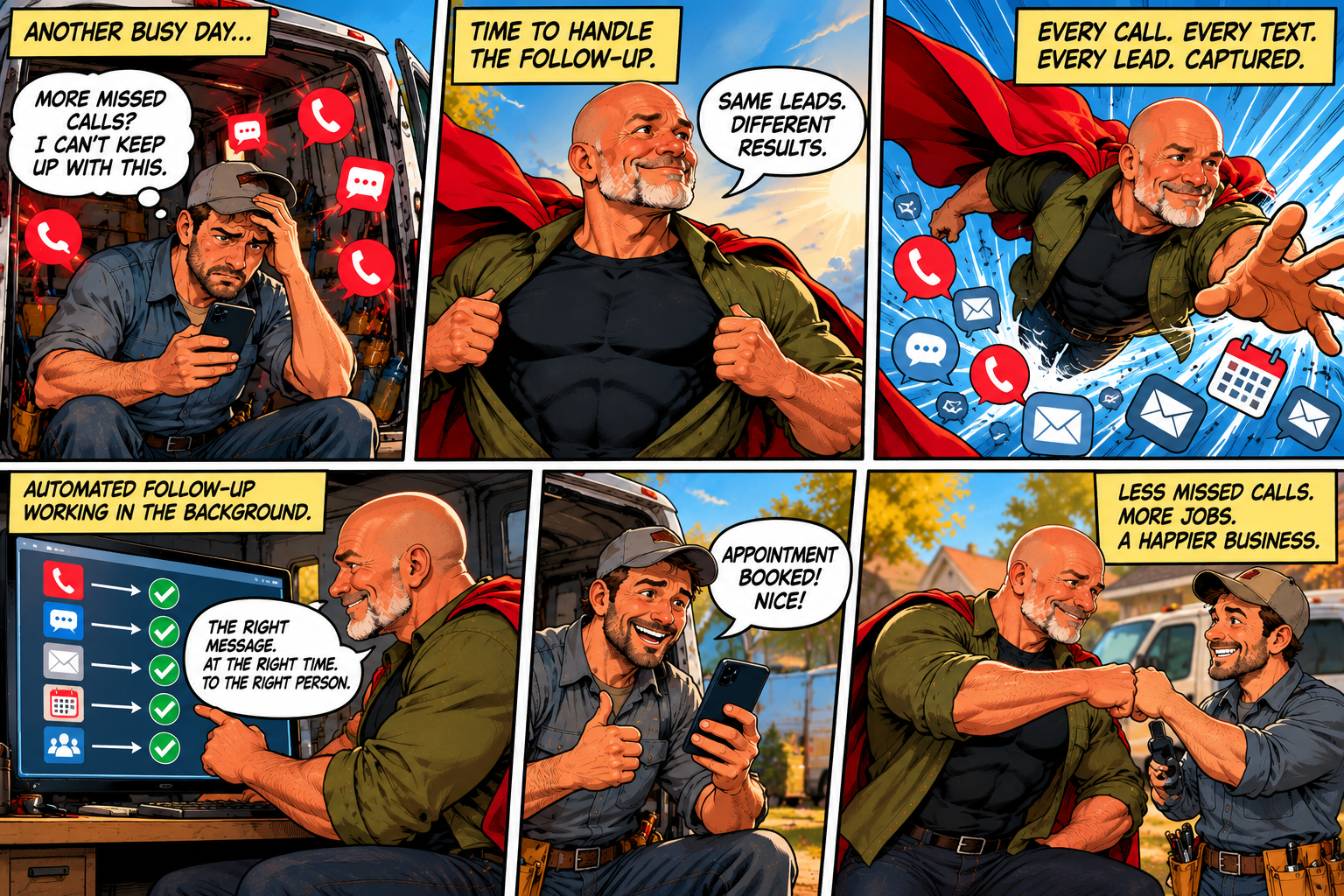
Text-back works best as one layer of a system that answers the call, catches anything that slips through, follows up, and shows you the numbers. That's how the Never Miss a Lead System™ is built:
Answer. An AI voice agent picks up when you can't, holds a real conversation, answers common questions, and collects the details of the job.
Catch. Missed-call text-back fires on any call that still slips through.
Chase. Automated follow-up keeps texting leads who went quiet, so nobody falls through the cracks on a busy week.
See. One reporting dashboard shows every call, text, and lead in one place.
Customers are ready for the "answer" layer. In the same CallRail survey, 50% of consumers said they'd use AI to book an appointment and 66% would use it to check hours or location (CallRail, 2025).
Missed calls are one of four places local businesses lose money. The other three are in
The Four Leaks Draining Every Local Business.
How Do You Know If Missed-Call Text-Back Is Working?
Text-back is working when missed calls turn into reply threads, and those threads turn into booked jobs. Track three numbers each month: missed calls, text replies, and jobs booked from those replies. If replies are low, rewrite the message to sound like a person. If replies come in but don't turn into jobs, your response time is the leak, and that's where AI answering and automated follow-up pay for themselves.
Frequently Asked Questions
Does missed-call text-back work on a landline?
It depends on your setup. Text-back needs a business number that can send texts, which most landlines can't. The usual fix is a text-enabled business line that forwards to your existing phones, so customers keep calling the same number.
Will customers think an automated text is spam?
Not if it sounds like you. A short message with your business name, a plain apology for missing the call, and a direct question reads like a busy contractor, not a robot. Skip the links and the sales pitch in the first message.
How fast does the text go out after a missed call?
Usually within seconds of the call going unanswered. That speed is the point. The text lands while the customer is still deciding whether to call the next business on the list.
Is missed-call text-back the same as an AI receptionist?
No. Text-back sends a message after a call is missed. An AI voice agent answers the call itself and holds a conversation. Most home service businesses get the best results running both, with the voice agent answering and text-back as the backup.
Hear What Your Customers Would Hear
Don't take our word for it. Call (501) 270-6890 right now. Ask a marketing question. Try to schedule a meeting with me.
That's exactly what your customers would hear while you're on a roof, in an attic, or asleep. Then picture it answering your line tonight.
Share this article
Read More Related Blogs