Practical Tools to Generate Leads and Drive Growth
Home service businesses don’t usually have a lead problem.
They have a follow-up problem.
In today’s competitive market, HVAC companies, roofers, plumbers, electricians, and contractors are already paying for leads through Google, Facebook, referrals, and their websites.
The problem is what happens after the lead comes in.
Missed calls, delayed responses, scattered messages, and inconsistent follow-up quietly cost local businesses thousands in lost revenue every month.
That’s where systems matter.
The right automation tools don’t just generate leads—they help businesses respond faster, stay organized, improve Google visibility, and convert more of the opportunities they already paid for.
This guide explores the best marketing automation tools for home service businesses, how AI-powered follow-up is changing local marketing, and how systems like the Edgewood Lead Follow-Up System help businesses stop losing work through the cracks.
Key Takeaways
- Marketing automation simplifies lead generation and customer follow-up for home service providers like HVAC and roofing companies.
- HubSpot, Mailchimp, and ActiveCampaign are dependable choices for local home service businesses, each with different strengths.
- AI-powered tools improve lead capture and qualification by automating conversations and follow-ups.
- Capabilities such as chatbots and missed‑call text‑back speed response times and help boost conversion rates.
- Pairing
Fractional CMO leadership with automation delivers strategic direction without the cost of a full-time executive.
- Choose tools based on lead generation features, CRM compatibility, and industry-specific workflows.
- Budget-friendly platforms like Zoho CRM, Sendinblue, and
Edgewood's Lead Capture Software offer practical options for smaller HVAC and roofing teams.
- Combining AI platforms with Fractional CMO guidance enables data-driven growth that scales with the business.
- Automated solutions help teams optimize campaigns by tracking behavior and improving messaging over time.
Every missed call, delayed response, or forgotten follow-up is a customer you already paid to acquire.
The good news? This is a fixable problem.
Click below and see how the
Edgewood Lead Follow-Up System
helps local businesses capture more jobs without spending more money on ads.
Schedule a Free Consultation
Top Marketing Automation Platforms for Local Home Service Businesses
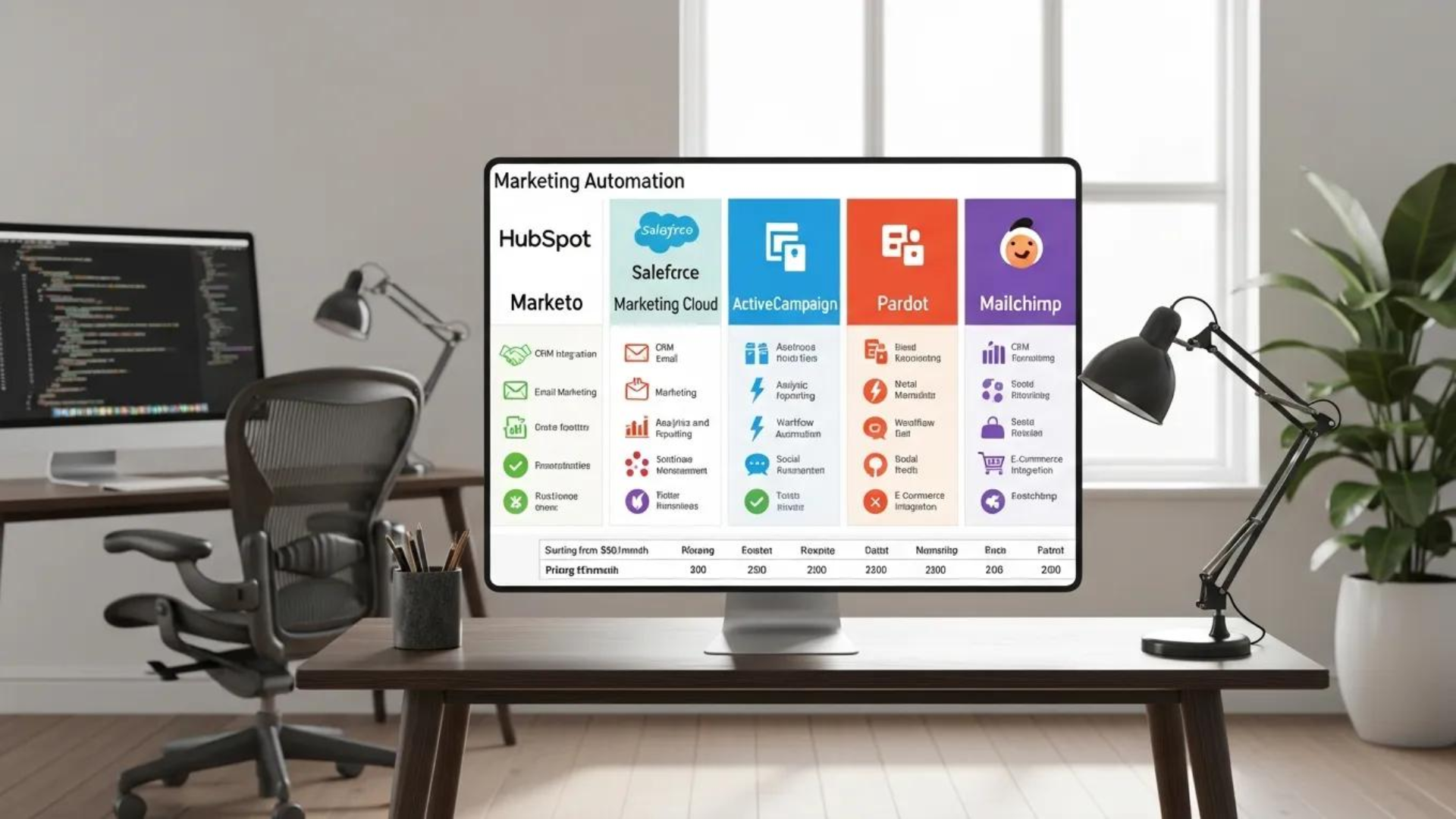
Several platforms stand out for home services because they balance automation, CRM capability, and ease of use. These options address common needs for local businesses: capturing leads, automating follow-up, and reporting on what’s working.
- HubSpot: Offers a full CRM plus marketing automation and clear reporting. Its workflows and analytics make it easy to track lead handoffs and measure campaign impact.
- Mailchimp: Best known for email marketing, Mailchimp now includes automation and audience segmentation tools that keep customers engaged with targeted campaigns.
- ActiveCampaign: Blends email, advanced automation, and CRM features for highly personalized customer journeys and reliable follow-up automation.
Each platform removes tedious tasks and provides insight into customer behavior so you can make smarter marketing decisions.
Comparing Features of Leading AI Marketing Platforms for Small Businesses
Choosing the right platform starts with comparing the features that matter most to local services: CRM sync, automation flexibility, and reporting clarity. Below is a concise comparison to help you weigh options quickly.
This quick comparison shows each platform’s strengths so you can match features to your business priorities—cost, ease of use, or automation depth.
How Automated Marketing Solutions Improve HVAC and Roofing Company Performance
Automation helps HVAC and roofing companies capture more leads and keep customers engaged without adding admin overhead. Automating routine tasks—like follow-up emails, appointment reminders, and review requests—ensures leads don’t slip through the cracks.
Email platforms and CRMs let you segment customers, personalize outreach, and track interactions over time. For example, email tools enable targeted nurture campaigns while your CRM logs appointments and service history. Analytics platforms like
Google Analytics
reveal which channels drive leads so you can invest where it actually pays off.
When used correctly, these tools increase conversion rates, improve customer satisfaction, and free your team to focus on delivering quality service.
How AI-Powered Marketing Tools Drive Lead Generation in Home Services
AI features amplify lead generation by automating qualification and response so prospects get attention immediately. Chatbots can answer basic questions, qualify leads, and even book appointments around the clock. Missed-call text‑back services re‑engage callers who didn’t connect, keeping the conversation alive and giving you another chance to convert.
AI also powers
smarter outreach: automated review requests after service help build local reputation, and predictive segmentation helps you target the right customers with the right message. Together, these capabilities improve both lead quantity and lead quality.
For many local businesses, the biggest improvement comes from response speed—not more ad spend. Systems like the Edgewood Lead Follow-Up System automate immediate responses to missed calls, website forms, Facebook messages, and chat inquiries so leads don’t disappear while crews are busy on jobs. In highly competitive local markets, being first to respond often matters more than being the cheapest option.
The Role of AI in Optimizing Customer Engagement and Follow-Up Automation
AI-driven workflows make follow-up timely and relevant. Chatbots capture visitor intent and contact details, routing qualified leads to the right person or scheduling appointments automatically. Tools like
Edgewood's Lead Capture System provides automation that maps customer journeys and triggers the next best action based on behavior.
Features such as missed-call text‑back reconnect prospects quickly, and automated review requests help maintain an active online presence. These tactics reduce response time, increase conversions, and keep your team focused on revenue-generating tasks.
Used together, these AI features give home service businesses a measurable edge in responsiveness and customer experience.
Why Local Lead Capture Matters More Than Ever
Local buyers move fast.
When homeowners search for HVAC repair, roofing services, or plumbing help in Little Rock, they usually contact multiple businesses at once. If one company responds immediately while another waits an hour, the faster business often wins the job.
That’s why local lead capture systems are becoming essential for home service businesses. Automated follow-up tools help ensure every lead gets acknowledged immediately through text, chat, or email—even outside business hours.
This reduces lead loss, improves customer experience, and helps businesses maximize the marketing dollars they already spend generating traffic and calls.
Case Studies: AI Marketing Success in HVAC and Roofing Industries
Real-world examples show the impact of automation. A roofing contractor that introduced an AI chatbot reported a noticeable rise in qualified leads within weeks. An HVAC company that automated follow-up texts and emails saw higher appointment show rates and better customer satisfaction scores.
These case studies demonstrate how targeted automation—implemented with clear goals—translates into faster growth and improved client relationships.
Why Combine Fractional CMO Services with Marketing Automation?
Pairing a Fractional CMO with automation gives home service businesses strategic leadership without the long-term cost of a full-time executive. A Fractional CMO sets priorities, defines measurable goals, and ensures automation supports business objectives—so tech investments deliver results.
With this approach, automation becomes part of a larger marketing system: strategy guides tool choice, and data from those tools informs ongoing optimization.
Strategic Benefits of Fractional CMO Leadership for Small to Mid-Sized Home Service Businesses
Hiring a Fractional CMO brings strategic advantages tailored to tight budgets and growth targets:
- Cost-Effective Expertise: A full-time CMO can exceed $150K per year; a
Fractional CMO delivers senior leadership at a fraction of that cost.
- Strategic Alignment: They ensure marketing efforts support business goals and create cohesive campaigns rather than disconnected tactics.
- Consistent Lead Generation: A strategy-first approach produces predictable systems for capturing and nurturing leads.
These benefits help small and mid-sized home service companies scale marketing efforts without overextending resources.
Integrating Fractional CMO Expertise with AI Marketing Platforms for Scalable Growth
Combining a Fractional CMO’s strategy with AI-enabled platforms creates a feedback loop: the CMO sets the goals, AI tools execute and capture data, and the CMO refines strategy based on performance. This lets businesses scale marketing in a controlled, data-driven way.
That integration ensures automation supports measurable outcomes—higher conversion rates, better ROI, and clearer paths to growth.
How to Select the Right Marketing Automation Tool for Your Home Services Business?
Picking the right tool starts with defining your goals: are you focused on capturing more leads, improving response times, or tracking campaign ROI? Match your priorities to platform capabilities and budget.
Key Criteria: Lead Generation, CRM Integration, and Industry-Specific Features
When evaluating tools, focus on these essentials:
- Lead Capture & Follow-Up Capabilities: Look for systems that automatically respond to missed calls, website forms, Facebook messages, and chat inquiries. Fast response times are critical in home services because homeowners often contact multiple businesses before making a decision.
- CRM Integration Options: Ensure the platform syncs with your CRM to centralize customer data and avoid manual entry.
- Industry-Specific Features: Prefer tools that support appointment scheduling, service history, and the workflows common to home services.
Prioritizing these areas helps you choose a tool that fits both current needs and future growth.
Affordable Solutions Tailored for HVAC and Roofing Companies
For teams watching costs, consider these accessible platforms that still deliver meaningful automation:
- Zoho CRM: Includes a free tier with essential CRM features that suit small teams getting started.
- Edgewood's Lead Capture System: Built specifically for local home service businesses to automate missed-call follow-up, capture leads faster, improve Google reviews, and keep communication organized in one place.
- Sendinblue: Offers budget-friendly email automation and SMS options for local outreach.
- GetResponse: Balances competitive pricing with solid automation and campaign tools.
These options provide practical automation without requiring a large upfront investment.
Frequently Asked Questions
What is a local lead capture system?
A local lead capture system helps businesses automatically respond to inbound leads from phone calls, website forms, chat widgets, Facebook messages, and other channels. These systems improve response speed and reduce lost opportunities.
Why do home service businesses lose leads?
Many home service businesses lose leads because calls go unanswered, messages sit too long, or follow-up is inconsistent while teams are busy on jobs. Fast response systems help reduce this problem.
Does fast follow-up really matter for local businesses?
Yes. In local home services, homeowners often contact multiple companies at once. Businesses that respond first are more likely to win the job—even if competitors offer similar services.
What factors should I consider when choosing a marketing automation tool for my home service business?
Focus on lead capture and follow-up features, CRM compatibility, ease of use, and customer support. Confirm the tool can automate the key touchpoints you rely on—calls, texts, emails, and scheduling—and that pricing fits your budget as usage grows. Finally, test the user experience to make sure your team can adopt it quickly.
How can marketing automation improve customer engagement for home service providers?
Automation enables timely, personalized communication: chatbots answer common questions instantly, automated emails and texts follow up after service, and review requests encourage feedback. These touchpoints make customers feel cared for while freeing your team from repetitive tasks.
Are there specific marketing automation tools designed for HVAC and roofing companies?
Yes. While many mainstream platforms can be configured for home services, some tools and templates are tailored to common industry needs like appointment scheduling, service reminders, and follow-up flows. Platforms such as Zoho CRM, Sendinblue, and GetResponse are commonly used because they’re flexible and affordable for HVAC and roofing teams.
How does AI technology enhance the effectiveness of marketing automation tools?
AI improves targeting, response speed, and personalization. It analyzes behavior to segment audiences, powers chatbots that qualify leads, and predicts the best next steps in a customer journey. These capabilities reduce manual work and increase the relevance of your outreach.
What are the benefits of using a Fractional CMO alongside marketing automation tools?
A Fractional CMO helps set measurable goals, choose the right tools, and build processes so automation supports long-term growth. They translate performance data into strategy, ensuring your automation investment produces consistent, predictable results.
How can I measure the success of my marketing automation efforts?
Track KPIs such as lead conversion rate, appointment booking rate, response times, and campaign ROI. Monitor email open and click-through rates, missed-call follow-up success, and customer feedback to see what’s working and where to optimize.
What common mistakes should I avoid when implementing marketing automation?
Avoid these pitfalls: not defining clear goals, skipping audience segmentation, and over-automating to the point of sounding impersonal. Also, don’t ignore training—your team needs to know how to use the system. Regularly review performance and adjust rules to keep automation effective and human.
Conclusion